
On Owen’s first day working at the lab, he’d been informed of their two big rules: No food in the lab. And no politics. Break either of those rules, and you were out.
He hadn’t asked what precipitated those two big rules. They were reasonable enough. But now, alone in the lab on a Friday night, he took a moment to wonder if playing Real Time with Bill Maher on the wall-mounted television was a fireable offense.
Not that it mattered anymore.
"What are those little shits going to do? They can't even fly in an airplane without an emotional support animal. Sorry, I won't be taking budgetary advice from self-proclaimed autistics who can't do fractions."
Congressman Richard Brennan laughed at his own joke, looking at the rest of the roundtable guests to join in, which they did, but with the decency to raise their hands to their lips, half-covering their smiles.
"Damn Yankee, confirm your dispersal units," Owen said into his headset, voice steady despite the rage that Brennan's smugness always triggered.
If only he could broadcast the interview through his headset, a reminder for the rest of the cell of why they were doing this.
Through encrypted channels that piggybacked on Nexus's own security systems, confirmations came in from across the country. Damn Yankee in Los Angeles, infiltrated into Cedars-Sinai's ventilation maintenance. Damn Irish in New York, embedded at Mount Sinai's respiratory therapy unit. Damn Fine in Chicago, working night shift at Northwestern Memorial.
Twelve operators in twelve cities, all coordinated from this pristine room in North Carolina where Owen Castellano had spent three years preparing for tonight.
Congressman Brennan didn’t appreciate the boos from the audience. Somehow the man still managed to look surprised that they weren’t clapping like seals for his stock standard “bootstraps” philosophy that had long since worn thin.
"Every generation thinks they have it tough. Now we have real problems, to be sure. But I don’t see these whiners coming forth with solutions.”
“Excuse me,” Bill Maher broke in, “but that’s exactly the kind of boomer bullshit the kids are complaining about. You can’t just look at a case like Dakota Danforth and think we don’t have a problem.”
“First of all, I’m not a Boomer. I’m Gen X. Second, Dakota didn’t pass away because of–”
“Pass away? Is that what we’re calling it?” Bill had the decency to look disgusted at the euphemism.
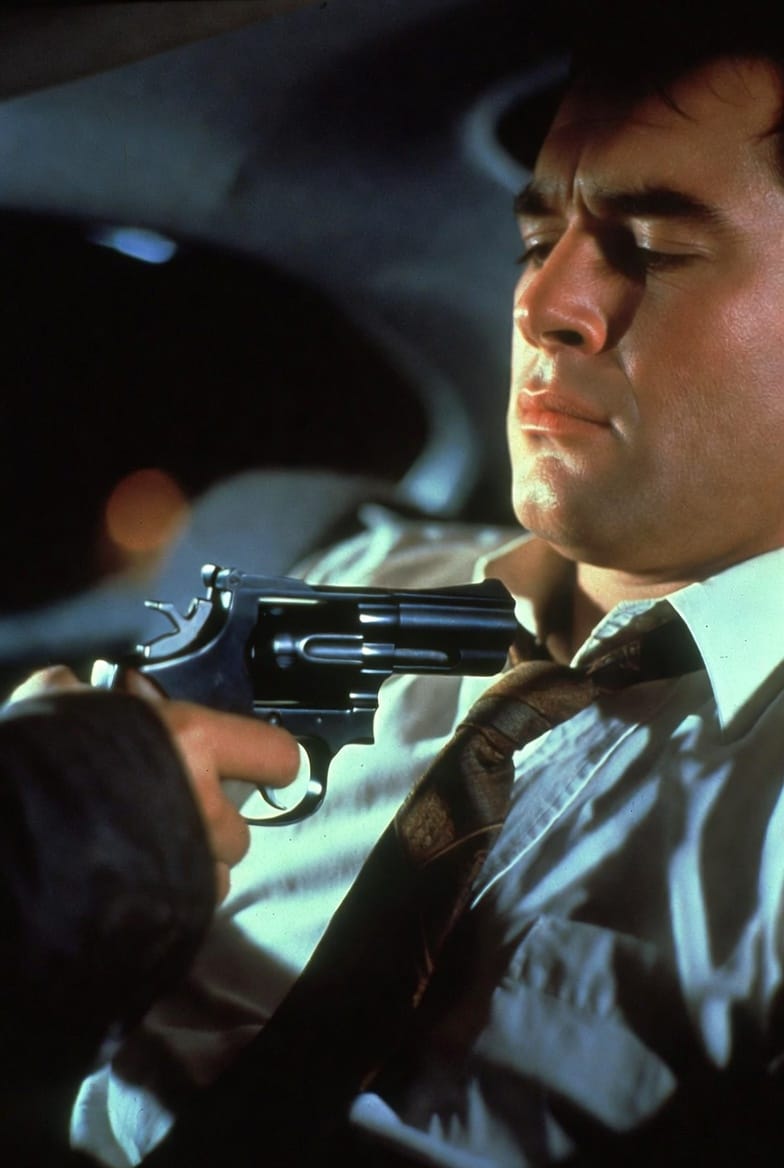
Above his workstation, Owen had hung a printed photo of Dakota with a magnetic clip. Dressed in his Army dress blues, Purple Heart pinned to his chest, prosthetic leg visible beneath the knee. A still from his suicide video, frozen in the moment before he'd eaten his gun.
"Take that down," Dr. Morrison had ordered last month. "It's unprofessional. Morbid."
Owen had simply stared at her—fifty-eight years old, three houses, kids still renting—until she'd walked away.
She should have known that Dakota was the last straw. But she didn’t.
None of them did.
"Twenty-three minutes to deployment," Owen announced.
He looked up at Dakota's photo, remembering when he'd first seen the video. He'd watched it six times straight, each viewing revealing new depths to his hatred. Owen had spent his earliest years being jealous of his friends for having parents, a home. Being raised by the state seems like a punishment. But then, he couldn’t remember exactly when, he became thankful for not being burdened by love for parents. If ever any jealousy had lingered, seeing footage from Dakota’s childhood would have washed away the last of it.
"My name is Dakota Danforth. If you’re old enough, you probably watched me be born. You watched me take my first steps, say my first words, cry on my first day of school. You all loved it. You loved it even more when she filmed me during panic attacks. My embarrassing puberty moments. You loved it all, even when you could see in 4k that I didn’t.”
The video had been live on YouTube. On Kick. on Rumble. On Twitch. Even on Substack and Twitter. Just an internet-famous guy in his military uniform talking about his disgusting mom and her obsessive parasocial viewers. Nothing to worry about, right? They all tuned in. Wanting to hear “the tea.”
"She made eight million dollars off my childhood," Dakota had continued. "Eight million. And you all know by now she kept every penny of it. I joined the Army because it was my only option. She wouldn’t pay for college. Then when I came back from Kandahar, she said it was the VA’s job to help me. Last week, you probably saw her announcement that in her will, she's leaving everything to a dog shelter in Mumbai. Not even American dogs. Indian dogs. Because I need to 'make my own way.'"
"Midwest units armed and ready," Damn Fine reported from Chicago.
Owen pulled up the deployment map on his personal screen. Research Triangle Park sat at the center of his web, the command node for a revolution three years in the making. From here, he could monitor every dispersal site, every infection vector, every carefully calculated death.
The pathogen itself was elegant in its simplicity. A modified rhinovirus—common cold—engineered to recognize cellular senescence markers. The same markers Owen had spent his legitimate career studying. In bodies under fifty, it would cause mild flu symptoms. In bodies over fifty, it would trigger catastrophic inflammatory cascades.
Clean. Merciful compared to what they deserved.
On the wall screens, the Real Time panel had moved on. The twenty-eight-year-old tech entrepreneur was trying to explain the student debt crisis to Brennan, armed with statistics and personal experience, including a graph on why removing property taxes for seniors had been catastrophic.
"Sweetheart," Brennan laughed, "when you've served three terms in Congress, when you've built a real business instead of an app that delivers cupcakes, then maybe we can have an adult conversation about economics."
"Fifteen minutes," Owen announced.
He thought about Dr. Morrison, probably asleep in her suburban mansion, the one she'd bought in 1995 for two hundred thousand that was now worth two million. Tomorrow she'd wake with a fever. By Monday, she'd be drowning in her own lungs. By Friday, her house would be on the market, and maybe, finally, someone under forty could afford to live near where they worked.
Owen looked back at Dakota's photo. In his final video, after listing every violation, every monetized moment of his stolen childhood, Dakota had pulled up his mother's Instagram. In case anyone had forgotten what she did, or was too young to remember. Pictures of his first erection sponsored by a mommy wellness brand. Videos of him crying after his first girlfriend dumped him, titled "Teaching Boys About Heartbreak #Sponsored." His leaked medical records from when he'd tried to kill himself at sixteen, which she'd turned into a six-part series on "Teen Mental Health Awareness."
"She gave birth to me," Dakota said in the video. "But I was never her son. I was content. Just a revenue stream she'd mined until there was nothing left but this." He'd gestured at his missing leg. "And when I came back broken from fighting her generation's war, she couldn't even pretend to care unless a camera was rolling.
"And the funniest thing is that I can see the future," Dakota had said to the camera. "The second I’m done with this livestream, she’ll already be planning the content. She'll monetize my death just like she monetized everything else.”
That was the moment the chat had erupted. And people started reporting the livestream.
Wait wtf is he serious?
Dakota, please don’t!
Everyone stop reporting the livestream! He needs to stay live so he knows we’re here with him!
And they were with him. They were all with him when he looked directly into the lens, that thousand-yard stare every veteran recognized. "I won't be the last. We won't forgive. We won't forget. We won't wait for you to die anymore."
He’d picked up a pistol from the floor and painted the clean white wall behind him with blood and brain.
And not a one of them looked away. Never again. There would be no more looking away.
The video had gone viral before the platforms could stop it. The mainstream news tried to frame as “just another troubled young man’s suicide.” But it was too late. No one bought that story anymore.
Fuck that boomer.
Fuck ‘em all.
That was the moment even the normies stopped playing nice. Dakota had become their patron saint, their burning bush, their Pearl Harbor.
"Ten minutes to deployment."
The Dakota video had changed everything. Before that, the movement had been abstract. They’d all bitched online, reposting clueless boomers who just didn’t understand why their kids wouldn’t travel to Florida to visit them. They were angry but civilized. After all, they’d been raised right.
Then Sharon Danforth had given her first interview after her son's suicide.
Sharon at sixty-two, Botoxed and bitter, sitting in her perfect kitchen bought with her son's pain.
"I'm devastated," she'd told the interviewer. "But not surprised. Dakota always struggled with gratitude. I gave him life, gave him opportunities, made him famous. Millions of kids would kill for what he had."
"But the money—" the interviewer had started.
"Was earned by my creativity and business sense. He was a toddler, you think he could have monetized a YouTube channel? Don’t be ridiculous! He had his strengths, but creativity, entrepreneurship…” she had sighed, then. Loudly and with gusto. “He just lived his life like a barnyard animal, you know? Mouth open and looking up, waiting to be fed. No drive, even though I did my best to teach him. I did my best."
The interviewer, barely thirty herself, had visibly struggled to stay neutral. "What about the dog shelter in India?"
Sharon had smiled. "Those animals have no voice. No choice. They deserve help. Dakota had every opportunity to help himself. He chose not to. That's not my failure, it's his."
The video had a hundred million views before the platforms killed it. They’d shut down the comments first, but that wasn’t nearly enough to stem the tide of hate. Of rage. The damage was done. The mask had slipped, and an entire generation saw what lay beneath. Active, proud contempt for the children they'd created and consumed.
They’d all had enough
"Five minutes," Owen announced to his network.
On the screens, Congressman Brennan was wrapping up his Real Time appearance with a final dismissal of generational concerns. "Look, you won’t see me pointing fingers at young people because they can’t buy a house. Costs are out of control. But demanding a wealth transfer from older people is just straight communism and we don’t do that here."
The audience—average age fifty-five—applauded, but still too tepid a sound for the Congressman’s liking.
Around the country, Owen knew, other cells were making final preparations. Not just in ops centers but in hospitals, ensuring the emergency rooms would be mysteriously understaffed tonight. In nursing homes, where certain night shifts had called in sick. In police departments, where response times to certain neighborhoods would be unusually slow.
They'd learned from every revolution that failed.
No manifestos until after.
No demands that could be negotiated.
No leaders to corrupt or co-opt. Just do what needs to be done and disperse.
He stood, facing Dakota's photo. In homes across America, people over fifty were settling into sleep, unaware they were breathing their last free air.
"Thirty seconds."
Tomorrow, they'd all understand. That contempt had consequences. That every dismissed concern, every laughed-off complaint, every "entitled millennial" slur had been building to this moment.
"Five seconds."
Owen thought about Congressman Brennan, probably looking forward to his nightcap, confident in tomorrow's sameness. About Sharon Danforth, planning her next grief-mining post. About Dr. Morrison, secure in her authority.
"Three."
What are those little shits going to do?
"Two."
This.
"One."
"Deploy."
Owen pressed the button.
Across America, ten thousand canisters whispered open. The pathogen, patient as compound interest, began its invisible journey.
"Deployment confirmed," voices reported through the channels. "Complete saturation in thirty minutes."
Owen stared at the map as red dots turned green. From this sterile room in North Carolina, he'd just initiated the largest die-off in human history. All those years of legitimate research perverted into one perfect plague.
Owen reached up and unclipped Dakota's photo from above his workstation. Folded it carefully and placed it in his shirt pocket, over his heart. Where medals would go, if his generation gave medals for what he'd done.
"Everyone disperse," he ordered.
One by one, the channels went silent. Owen began his practiced routine—wiping servers, destroying evidence, leaving behind only enough to ensure the story would be told correctly. He refused to let some slapdash investigator determine this was an accident, some lab oopsie. Or worse, foreign terrorism. Absolutely not. This was on purpose. And it was necessary.
Hold your applause. I know you’ll all need a minute to process this.
"We did it," Owen whispered. "We made them pay."
The timer on his screen had reset, now counting up. Marking the hours and minutes of the new world. A world where Dakota's sacrifice meant something. Where adults could finally start families and have the lives that were owed to them.
He turned off the lights and locked the door behind him. Outside, the night air smelled crisp and clean, carrying nothing but promise.