
Kansas City Gothic: Where the Underground Never Left
"If you want to see sin, forget Paris, go to Kansas City." — Edward R. Morrow, Omaha World-Herald, 1936
The recent move of the Kansas City Chiefs from Missouri to Kansas had most of the country confused: “Wait… I thought Kansas City was in Kansas.” It is. And Missouri. The city is cut down the middle by the Missouri River, though united by common history–state lines be damned.
Wyandotte County—where Kansas City, Kansas, sits—is locally called "The Dirty 'Dotte." Most residents use the nickname with a kind of defiant affection. We’re not like neighboring Johnson County with its enviable average income level and near-nonexistant violent crime rates. The ‘Dotte still posts an astonishing murder rate, but because violent crime concentrates in a handful of blocks, most people barely notice. They drive past, windows up, and arrive home to tree-lined streets where it might as well be happening in another city.
This is how Kansas City works. Always has.
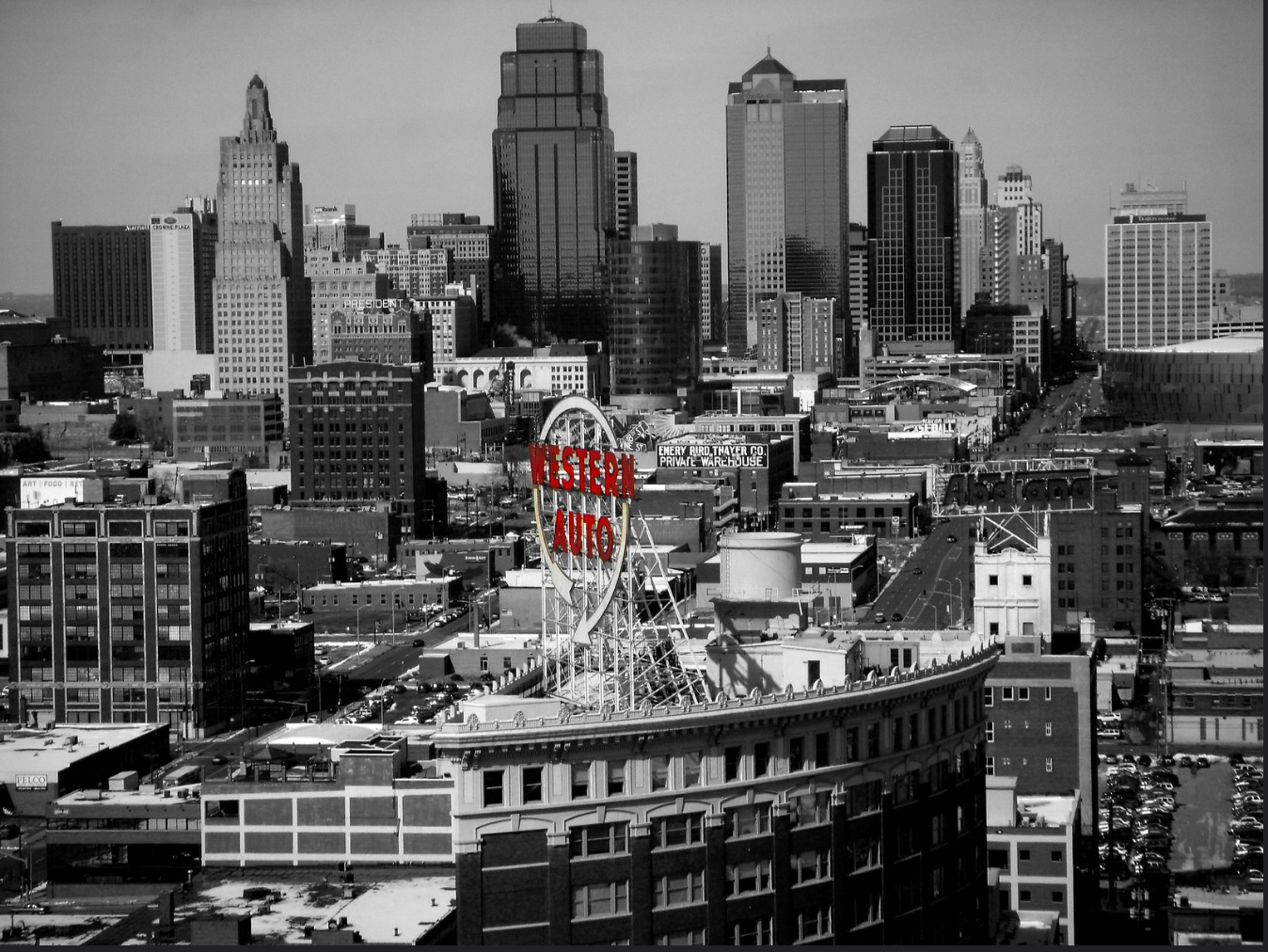
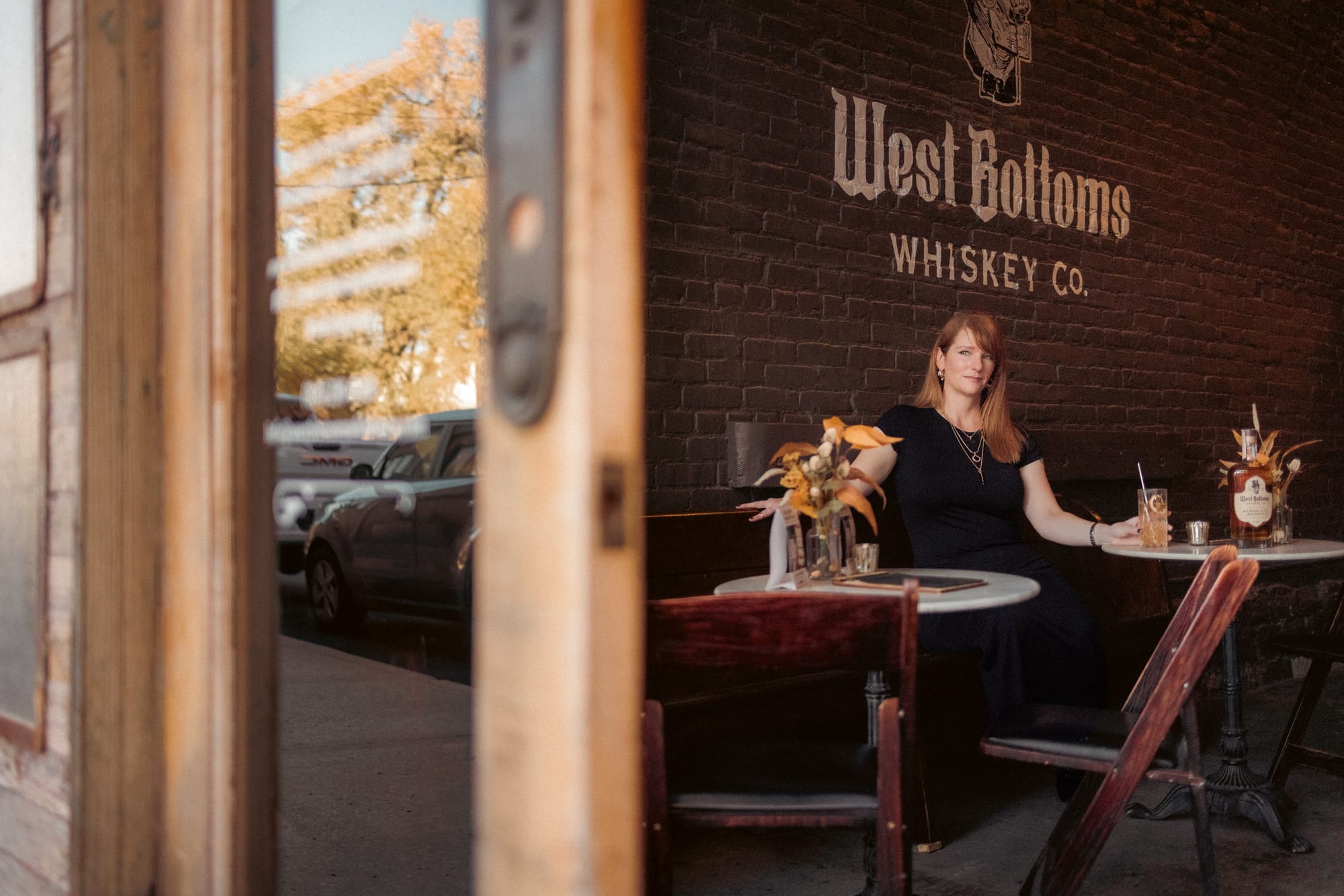
Drive through the Missouri side on a gray afternoon and you'll see the bones of something darker underneath the pleasant Midwestern surface. The West Bottoms warehouses, which now hold hipster thrift shops, antique stores, and bespoke whiskey distilleries, began as a single saloon where Tom Pendergast's brother Jim built his corrupt empire. The jazz district still holds strong at 18th and Vine, graffitied and bullet-riddled. Count Basie once played until dawn in those clubs, though you’d be crazy to be there after dark now.
The transplants who've flooded in over the past decade—drawn by affordable housing and "livability" rankings—have no idea what this city was built on. They see the craft breweries in the Crossroads, the revitalized streetcar, the nice families pushing strollers through Brookside. They don't see the foundations.
Other cities have literary scenes. Kansas City has a literary underground.
And it always has.
The Original Black Market
Between 1926 and 1939, Boss Tom Pendergast controlled nearly every facet of Kansas City life without holding major office. From a two-story yellow brick building at 1908 Main Street, he ruled through patronage, ballot-stuffing, and the ironclad understanding that loyalty deserved reward. Businesses paid five to ten percent of gross revenue just to operate without harassment. The machine's tentacles reached into the governor's mansion, the police, the federal prosecutor's office.
Modern politicians like to wag their finger at that era, spouting lame platitudes about how “we know better now.” What none of them want to admit is that dirty machine worked.
Not just in the corrupt sense. The Nelson-Atkins Museum opened during machine rule. So did the University of Kansas City. The Country Club Plaza rose on Pendergast's watch (and it’s been steadily declining under Kansas City’s current “enlightened” mayor. Make of that what you will).
While other cities crumbled during the Depression, Kansas City built.
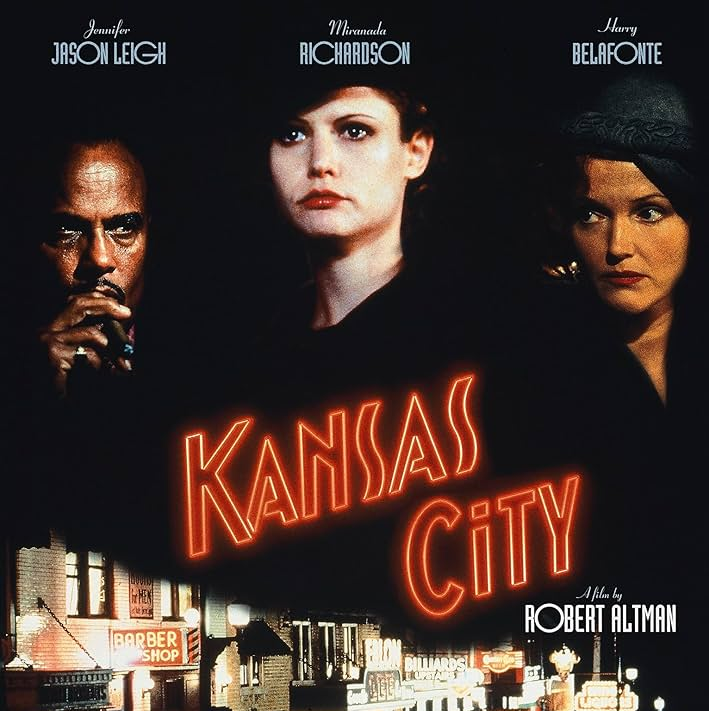
And more than anything, Kansas City played. When Prohibition shut down nightlife across America, Boss Tom kept the liquor flowing. The 18th and Vine district—a self-contained Black ecosystem forced into existence by racist housing covenants—became ground zero for a jazz revolution. Count Basie, Charlie Parker, Mary Lou Williams, and dozens of others invented new music in clubs that never closed, because the permissive environment meant nobody told them they couldn't.
The paradox nobody acknowledges: illegality enabled authenticity, a distinct soul and flavor no other city had.
When reformers finally took down Pendergast in 1939, they came for the clubs too. The Reno was shuttered. A 2 a.m. curfew killed the jam sessions. Jay McShann said it bluntly: "Kansas City died after Pendergast."
The reformers got what they wanted. The city became respectable. The music never recovered.
But the cultural operating system—distrust of official channels, contempt for gatekeepers, the conviction that "legitimate" just means "controlled"—never disappeared.
It went underground. Into the writing.
The Literary Inheritors
Gillian Flynn: Unapologetic Flyover Trash
Gillian Flynn was born in Kansas City and grew up in the Coleman Highlands neighborhood (Missouri side. A lower-middle-class neighborhood). Both parents taught—her mother, reading comprehension; her father, film. She attended KU, earned a journalism degree, spent years reviewing television for Entertainment Weekly.
It all sounds so straight-laced. So vanilla. Looking at her resume, the publishing industry in New York had no idea what they were in for.
Flynn didn't do the Iowa Writers' Workshop. She didn't write "literary fiction" about sensitive young men having epiphanies. She didn't make her characters likeable for book club audiences.
She wrote Sharp Objects—a psychological thriller about a self-harming journalist returning to her hometown to cover child murders, featuring a monstrous mother who hides behind “Midwest Nice.” Publishers rejected it. The characters weren't likeable, they said. Women wouldn't want to read about women doing bad things.
Flynn thought that was absolutely ridiculous.
She found a publisher willing to take the risk. Then came Dark Places, diving into rural Midwest Satanic panic. Then Gone Girl—"a whodunit where you find out who done it in the middle" with "two main characters who aren't very likable." Publishers said it wouldn't work.
It sold twenty million copies.
What makes Flynn interesting is that she succeeded by leaning into her flyover country roots. Her books all feature Kansas City; Gone Girl in particular looks at the differences between New York society girls and the Kansas City boy who has to put up with them. She gets it so right, I knew on the first reading she was one of us.
Sharp Objects examines what Midwest money looks like and how it hides. The gothic mansions. The family secrets papered over with philanthropy. The violence that stays invisible because everyone agrees not to see it. Or talk about it.
Sound familiar?
You can't write authentic Midwest Gothic from Brooklyn. It reads as cosplay. Nobody in New York knows what Frito Pie is. Gillian Flynn does.
She now runs her own imprint under Zando, specifically seeking voices that "don't fit into one specific shape"—continuing the black market tradition. I guess it’s in the blood.
Jim Butcher: The Empire Outside the Establishment
Jim Butcher was born in Independence, Missouri, in 1971. He still lives there. Despite being only forty minutes from my house, I’ve never been to Independence. Apparently, it’s where you go to get meth, these days. But if Butcher still lives there, I imagine it’s got a few more notable features. It’s a funny thing, the state line. We tend to keep to our own side. And Jim Butcher is the most Thoroughbred son of Missouri there ever was.
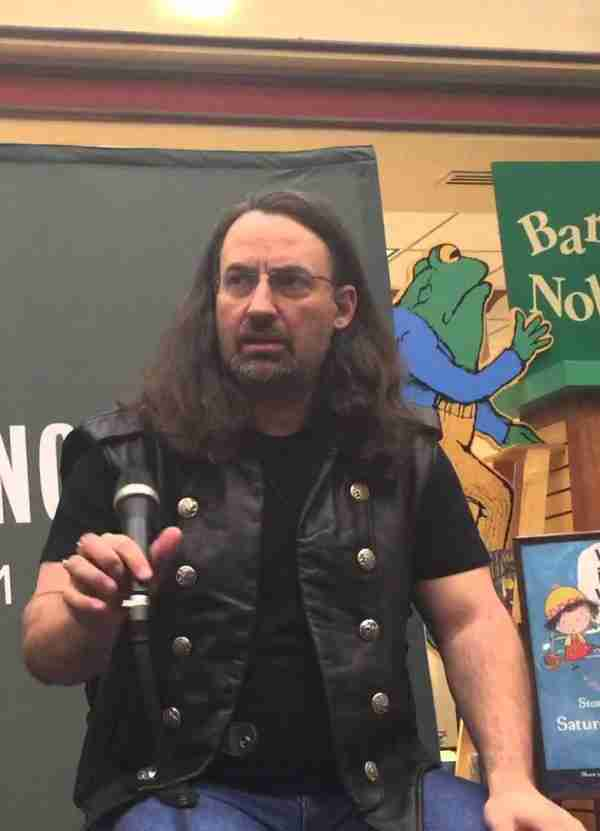
If you don’t know, Butcher writes urban fantasy—a genre the literary establishment, to this day, barely acknowledge the existence of. The Dresden Files follows Harry Dresden, a professional wizard operating out of Chicago, navigating supernatural politics while solving cases too strange for the police. Noir detective fiction meets Dungeons & Dragons, narrated by a guy who's been burned too many times to trust easily but still can't stop helping people.
He wrote his first novel at nineteen. By his own account, it was terrible. So were the next two. His writing teacher encouraged him to try urban fantasy instead of the traditional high fantasy he'd been failing at.
"When I finally got tired of arguing with her and decided to write a novel as if I were some kind of formulaic, genre-writing drone, just to prove to her how awful it would be," Butcher later said, "I wrote the first book of the Dresden Files."
Publishers rejected it anyway. Urban fantasy "wasn't marketable."
He found a small press willing to take the shot. Now there are eighteen novels and counting, plus short stories, graphic novels, and an award-winning role-playing game. Millions of readers. And the New York literati still sneer that it’s low-rent. They probably say the same about Butcher himself and everyone else who doesn’t disown their flyover roots.
Butcher doesn't care.
The funny thing is that Butcher originally wanted to set the Dresden Files in Kansas City. His mentor convinced him to choose a larger city. He landed on Chicago through process of elimination.
And I suppose that’s acceptable. Chicago is a different animal than Kansas City, but we still roll together. The people who brought you frito pie casserole can look fondly on Chicago’s odd idea of pizza… as it too looks suspiciously like a casserole.
But he stayed in Independence. Operates on his own terms. Built infrastructure outside official channels—conventions, direct reader engagement, the kind of grassroots community-building that mirrors what Kansas City jazz musicians did when mainstream venues wouldn't book them.
Richie Tankersley Cusick: Underground YA Horror
Here's a name you might not know but probably should.
Richie Tankersley Cusick was born in New Orleans but moved to Kansas City after college, where she worked at Hallmark for nine years. Her house was haunted—she claims every house she's ever lived in has been—and she wrote her first novel on evenings and weekends.
The 1980s YA market was dominated by "problem novels"—books about drugs, divorce, fitting in, teenage issues handled with therapeutic earnestness. Cusick had a different idea: What if I just scare the shit out of them instead?
She wrote genuine horror. Not "spooky." Certainly not "safe." The Lifeguard, Trick or Treat, Teacher's Pet, April Fools—these were nightmares on the page, aimed directly at readers who craved darkness the publishing industry assumed they shouldn't want.
Her popularity grew alongside R.L. Stine and Christopher Pike, but Cusick had been there first, pushing boundaries others would later be credited with breaking. The books NYC editors thought were "too dark" became cult classics, especially her two adult novels, Scarecrow and Blood Roots. The funny thing is, you can tell which city influenced which book. Scarecrow, though not set in the Midwest, had all the hallmarks of a Kansas City girl stuck in the far reaches of the countryside. Meanwhile, Blood Roots, which is the most bat shit work of fiction I’ve ever read, is full-on Louisiana gothic and I love to see the contrast.
WATCH: Re-Reading 90s YA Slasher Books (Do They Hold Up?)
Because Cusick understood something about young readers that gatekeepers refused to acknowledge: kids—like Kansas City itself—have darkness underneath the pleasant surface. And they don't need adults deciding what they're allowed to feel.
What Makes Kansas City Gothic Different
Kansas City Gothic isn't aesthetic Gothic. No castles or atmospheric moors. It's structural Gothic, one built on contradictions.
This city sprawls across two states and a dozen suburbs, each with its own rules. Wide-open pastures sit a ten-minute highway drive from abandoned warehouses and the worst urban decay. Massive mansions rise from downtown blight. Panhandlers know exactly which side of the intersection to work, because one city allows it and the other—directly across the street—doesn't. Trump flags wave from the back of pickup trucks sidling up next to Teslas with bumper stickers that read: I bought this before we knew Elon was crazy. Liberal and conservative all mixed together, Black and white, all living slightly different than what the coastal influencers push. Even in something as banal as fashion—KC women reaching for Kate Spade (another Kansas City girl, may she rest in peace) while New York moved on to whatever's "on-trend" this season.
The coasts don't know what to do with a place like this. It doesn't fit their narratives.
Compare this to New York, where literary culture is policed by agents, editors, and MFA programs. Where the question is always "Is this publishable?"—meaning "Will this appeal to the gatekeepers?" Where you might offend the right agent at a cocktail party and tank your career.
Kansas City has none of that. No scene to perform for. No workshop culture smoothing your edges. No cocktail parties where connections matter more than words.
Just: write the dark shit. See if it's true.
Flynn's Amy Dunne, Cusick's small-town killers, Butcher's Harry Dresden operate perpetually on the margins and were never designed to appeal to coastal sensibilities. They emerge from a lived environment where the Midwest nice veneer has always hidden something more pragmatic underneath.
This city built itself outside official channels. The violence stays invisible. The foundations stay buried. The nice families in Brookside have no idea what's underneath their feet.
But the city knows. It remembers. And like it or not, the writers who make their home here, no matter which side of the river, write what the city won’t say out loud.