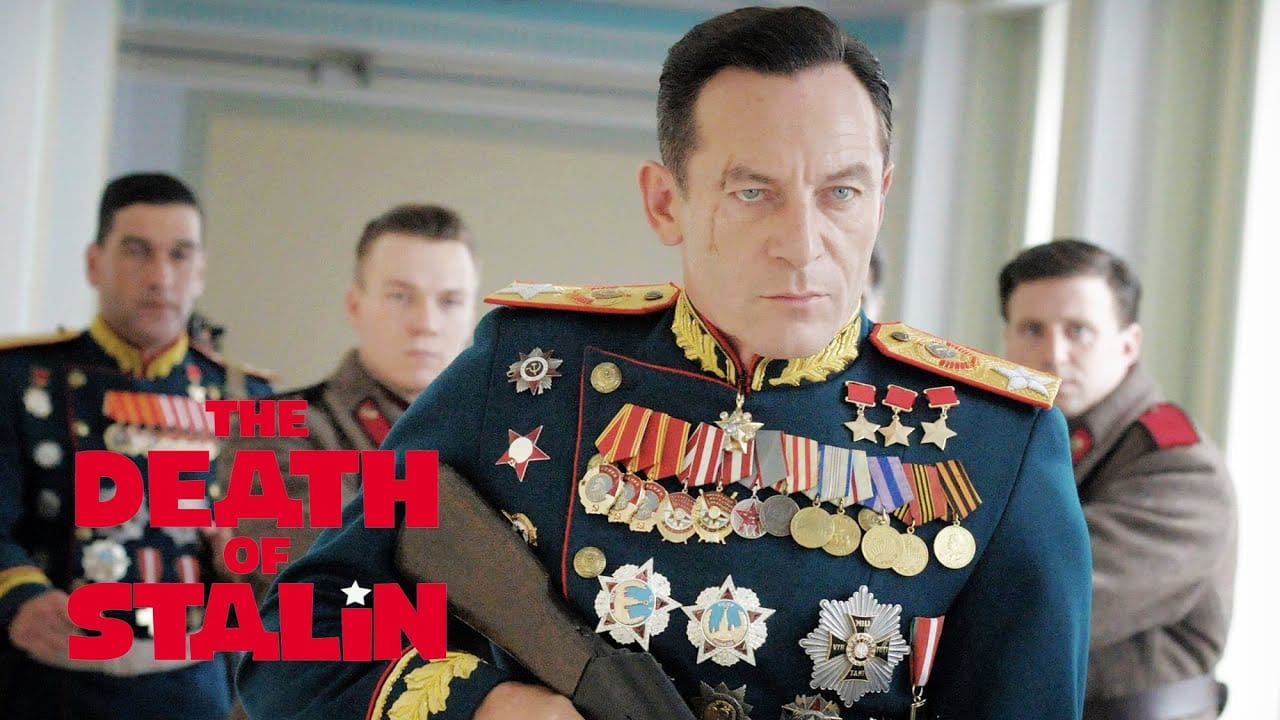

Writer and director Armando Iannucci tells you exactly what kind of film you're watching in the first ten minutes of The Death of Stalin. A pianist performs a Mozart concert on Radio Moscow. So lovely and skillful is her playing that Stalin himself calls in and requests a recording. In a moment straight out of Monty Python, the station manager, upon realizing the concerto was live and wasn’t recorded, forces the entire audience back into the concert hall at gunpoint to restage the performance.
“No please, take your seats! No one is going to die,” the station manager assures, sweat pouring down his face as he tries to maintain a smile. “Comrade Stalin would like a recording.” The original conductor faints from terror, hitting his head on a fire extinguisher. The replacement conductor believes he’s about to be dragged off to be killed when the knock comes at his door. He implores his wife to “say what you must” before steeling himself to open the door, nearly fainting from relief as he’s dragged out in his pajamas to conduct the repeat concerto, rather than to face the wall.
This is a comedy. Every frame of that sequence is built for laughs, and it delivers. But nobody on screen is joking. The stakes of not delivering exactly what Comrade Stalin has “requested” are crystal clear to everyone. The conductor didn't faint for comedic effect. He fainted because he understood, correctly, that a subpar performance could get him killed. The station manager's flop sweat is real panic. And the whole elaborate, ridiculous scramble to assign blame for the lack of a recording carries the unspoken weight of a life lived in perpetual mortal danger.
The film never once tells you when to laugh and when to be horrified, and it seems to understand that every well-earned laugh will inspire a twinge of guilt in the audience. That refusal to mute the laughs or dismiss the evil portrayed is the entire engine of the movie, and it is what makes The Death of Stalin one of the most effective pieces of political satire produced in the last twenty years.
The Survival Protocols
After Stalin collapses (alone, on the floor, because his guards are too afraid to check on him), the members of the Central Committee begin arriving at his dacha. What follows is a masterclass in filming human cowardice at face value.
These are men who have their wives write down everything said at Stalin's dinner parties so they can review the summary later, checking for anything that might have landed wrong. Khrushchev, played by Steve Buscemi, comes home and rehearses the evening's jokes with his wife, marking which ones got a laugh from Stalin and which ones didn't. This is a man who understands that the wrong punchline, recalled incorrectly by the wrong person, could erase him from public life overnight. Or just erase him.
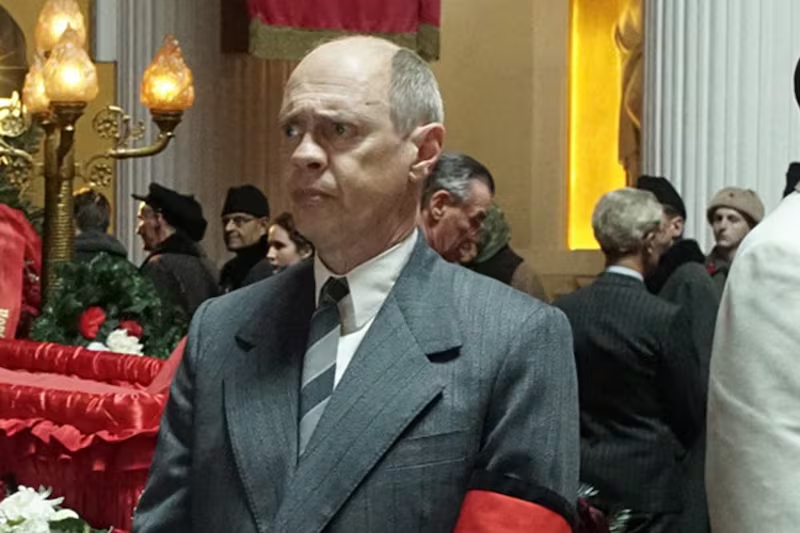
Beria, the head of the secret police, mentions in passing that Molotov is on "a list." Molotov doesn't argue. He doesn't ask questions. He adjusts. When Stalin dies and Beria takes Molotov off the list to consolidate his own support, Molotov adjusts again, this time praising the system that nearly killed him. His wife, who has been in a labor camp, is returned to him, and he receives her as though she'd been away on holiday. Khrushchev just waves goodbye to Molotov when the list is mentioned, because what else do you do? You already know how this works.
If you’re not a student of history, please understand that Iannucci didn't invent these behaviors. The historical record is full of them, and in several cases the reality was stranger than what made it into the script (the real Zhukov wore twice as many medals as Jason Isaacs does in the film, and the real restaged concert went through three conductors, not two, because Iannucci thought audiences wouldn't buy it). The comedy works because the camera simply documents, without editorial distance, what people do when absolute power has made every social interaction a life-or-death performance. You don't need to write jokes when the source material is a system that turns grown men into nervous children trying to read their father's mood at the dinner table.
The Monster Who Doesn't Wink
Simon Russell Beale plays Beria as the most terrifying character in the film, and he does it without a single moment of camp. In a movie full of panicking bureaucrats tripping over themselves, Beria is calm, deliberate, and genuinely predatory, even as he spends most of the film smiling. Though it is inferred all the committee members enjoy the perks of their position, it’s made clear Beria is a genuine sexual predator. He also orders executions with an undercurrent of glee, whereas the others seem to find it just another unpleasant part of their job. And then it puts him in the same room as the slapstick power jockeying and lets the audience figure out how to process both realities simultaneously.
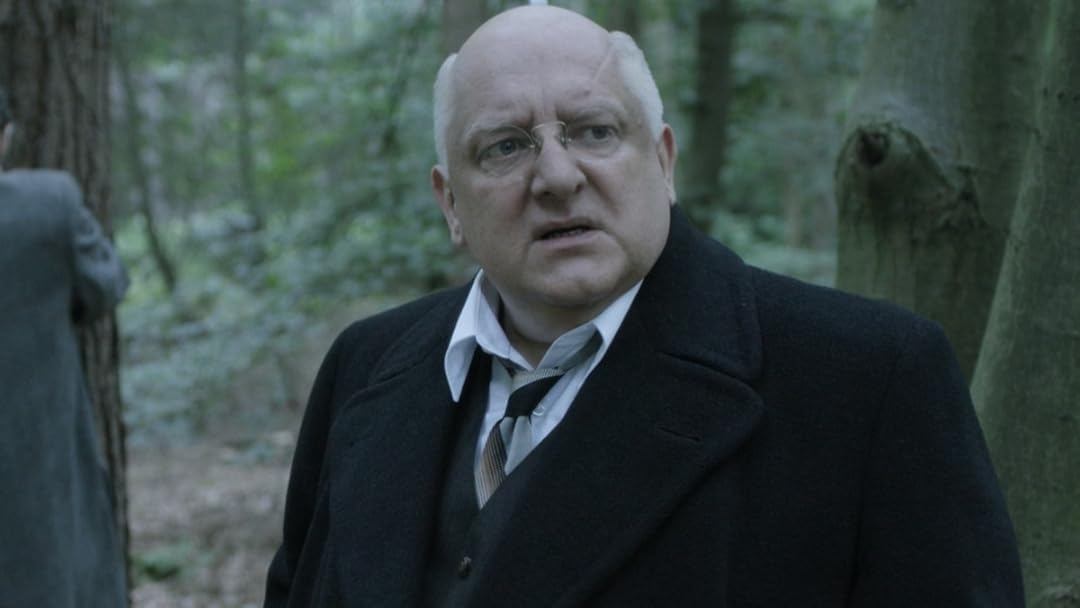
Most dark comedies pick a lane. Either the villain is funny (and therefore safe), or the villain is terrifying (and therefore not funny). Iannucci refuses the choice. Beria is a rapist and a murderer and he is also a participant in farcical committee meetings where grown men argue about the order of their limousines. The audience is forced to laugh in the same room where people are being dragged to their deaths, including a father being sold out by his own son.
The satire lands because the violence stays real. Were Beria to be softened into a cartoon, and the whole film would collapse into a quirky period comedy about silly Russians. Keep him monstrous, and the laughter turns into something that implicates the audience for laughing.
Then again, maybe Russia wouldn’t have banned the film if they’d leaned into the slapstick.
The Man With the Army
Jason Isaacs enters the film late, playing Marshal Zhukov, and the energy shifts immediately. Covered in medals, speaking in blunt Yorkshire English, Zhukov is the only character in the film who says exactly what he means. He mocks the committee members to their faces. He punches Stalin's drunken son, Vasily, square in the jaw. He treats the elaborate verbal dances of self-preservation that every other character performs with open contempt.
He can afford to. He has an army.
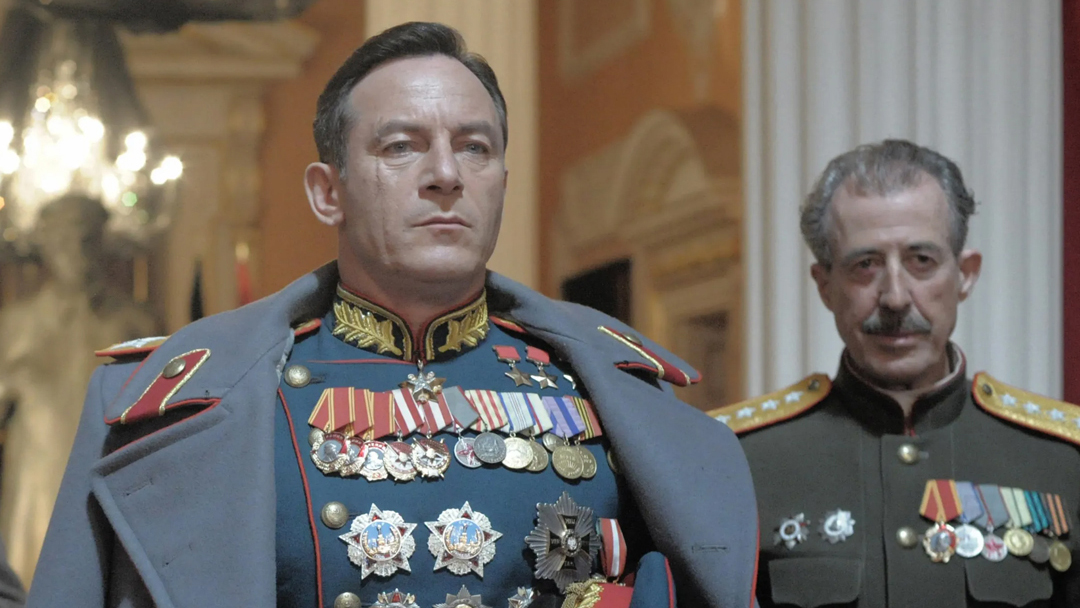
This is one of the sharpest observations about how authoritarian systems operate. Every other character in the film communicates through layers of strategic ambiguity, because directness can get you killed. Honesty, in a system where the wrong sentence at dinner can put your wife in a labor camp, is a privilege. And the only person who can afford that privilege is the one whose capacity for violence exceeds everyone else's in the room. They pretend that it’s all about order, the strict hierarchy that keeps Soviets from descending into western decadence. But it isn’t. Zhukov is not the most senior man in the room, not even close. But he’s the only one who doesn't need to play word games. Might makes right, and all the rest is self-congratulatory pretense.
Isaacs plays this with such relish that Zhukov becomes the film's most entertaining character, which is its own kind of satirical trap. The audience cheers for the honest man without pausing to consider that his honesty is funded entirely by the threat of overwhelming military force. And we love him even as he cheerfully encourages his men, “Well, go on and kill them,” about two soldiers who saw something they shouldn’t have. Monstrous though he is, in a film about people who lie to survive, the guy who tells the truth comes off as a hero.
“I never thought it would be you”
Buscemi's Khrushchev is, for most of the film, the closest thing to a protagonist. He's self-deprecating. He knows the other committee members look down on him. He didn't go to university, and he carries that chip visibly. While Beria schemes with cold precision and Malenkov (Jeffrey Tambor) flounders as the nominal successor, Khrushchev hustles. He works his relationships and does his best to make people laugh. Buscemi plays him like a guy at a poker table who knows his hand is weak, so he's playing the other players instead of his cards.
And then, gradually, the buffoonery recedes. The casting of Bescemi here was a master stroke. He plays a hapless idiot criminal in Fargo just as convincingly as a stone-cold mob boss in Boardwalk Empire. But those were two different projects filmed decades apart. In The Death of Stalin, he has to pivot from one extreme to the other, all in the same character.
The alliances Khrushchev builds stop looking like desperate survival moves and start looking like a coordinated campaign. His outrage at Beria's crimes, which initially reads as genuine moral horror, reveals itself as a political weapon he deploys at exactly the right moment to turn the committee against his rival. By the time Beria is dragged from the room, the audience has watched Khrushchev execute a complete political takeover while appearing to be the least threatening person at the table.
The final stretch of the film lets you sit with the realization that you were rooting for him. His jokes were funny and his seeming missteps were charming. And none of it was accidental. The audience arrives at the same understanding as Stalin's daughter, Svetlana, who watches the man she dismissed as a clown assume her dead father's seat, while banishing her to Germany.
“I never thought it would be you,” she says to him, as Beria’s body burns just a few feet away.
The funny one was running the table the entire time.
The Ban
I mentioned earlier that this movie was banned in Russia. Maybe that surprises you, but it shouldn’t. The Ministry of Culture revoked the film's distribution certificate after a petition signed by over a hundred Russian cultural figures declared it an attack on the dignity of the Russian people. That being said, by January 2019, the film had been illegally downloaded an estimated 1.5 million times within Russia.
The ban is the final piece of evidence for the film's argument, and it deserves examination on its own terms.
Russia's official position on the Soviet era is highly selective. The purges are acknowledged, at a safe historical distance, as excesses. Maybe having around 700 thousand people murdered was a trifle too much. Stalin himself occupies an ambiguous space in Russian public memory, sometimes condemned, sometimes rehabilitated as a wartime leader who built a superpower. What is never up for debate, in official Russian discourse, is the seriousness of Russian power itself. Tragedy can be absorbed into the national story, so a solemn film about the victims of Stalinism can be watched, discussed, and folded into a narrative about a great nation that endured dark times and emerged stronger. That kind of story actually reinforces the mythology.
The Russians do love their tragedy porn.
Comedy… not so much.
A comedy that shows the men running a nuclear superpower behaving like panicked middle managers, tripping over each other, lying about their dinner conversations, and casually waving goodbye to a colleague who has been sentenced to death—that says the cruelty was never impressive. It was pathetic. The Soviet system is laid bare as not having produced strong men. Quite the opposite. It produced cowards who happened to have access to firing squads.
The petition's language is telling. The signatories didn't say the film was inaccurate (though historians have noted its liberties with chronology and detail, as any dramatization takes). They said it violated the dignity of the Russian people. Dignity. That's the nerve the film hit. A tragedy lets you maintain dignity. A comedy strips it away.
And the behavioral template Iannucci documented, the loyalty performances, the surveillance of speech, the instant ideological pivots when the political wind changes, the rivals who vanish from public life, the media operating in terror of getting the approved message wrong, was still on full display when the film premiered in 2017.
Russia treated The Death of Stalin as a threat. That tells you everything about whether the satire worked.
The Successful Satire
Most political satire produced today fails for a simple reason: it is afraid of its own subject matter. It picks targets that its audience already despises, confirms what they already believe, and calls the result brave. You can watch years of American late-night television and never encounter a piece of political comedy that asks its audience to feel uncomfortable about their own reactions.
The Death of Stalin asks that of you constantly. It asks you to laugh at scenes where people are being murdered. It asks you to root for a character who turns out to be just as ruthless as the one you wanted deposed. It asks you to cheer for the honest man and then realize his honesty is just a different kind of power. And it does all of this without ever stepping outside the historical record to invent its absurdities. It was already there. It just felt fictional because they don’t teach this shit in schools.
Funny, that.
Satire fails when it flinches, and Iannucci understood that the darkness is the material. You don't soften it. You put it on screen next to the farce and let the audience deal with the fact that they're the same thing. That's why the film works. That's why Russia banned it. And that's why, in a media landscape saturated with political comedy that congratulates its audience for already agreeing, The Death of Stalin still feels like the real thing.