What Happened to Gillian Flynn?
In Finding Forrester, Sean Connery plays William Forrester—a reclusive novelist who wrote one brilliant book, won the Pulitzer, and vanished from public life. The character is entirely fictional, but the archetype he represents is one we've been romanticizing for decades. JD Salinger published The Catcher in the Rye and retreated to New Hampshire; we've been obsessed with him ever since. Harper Lee gave us To Kill a Mockingbird and went quiet for fifty-five years. We made her a saint for it.
We love the writer who disappears. The hermit genius. The one-and-done legend who lets the record stand.
But there's a catch: we only grant that mythology to writers who stop entirely. Writers who pivot—who keep working, just not in the form we want—don't get the same reverence. They get suspicion. They get "What happened to you?"
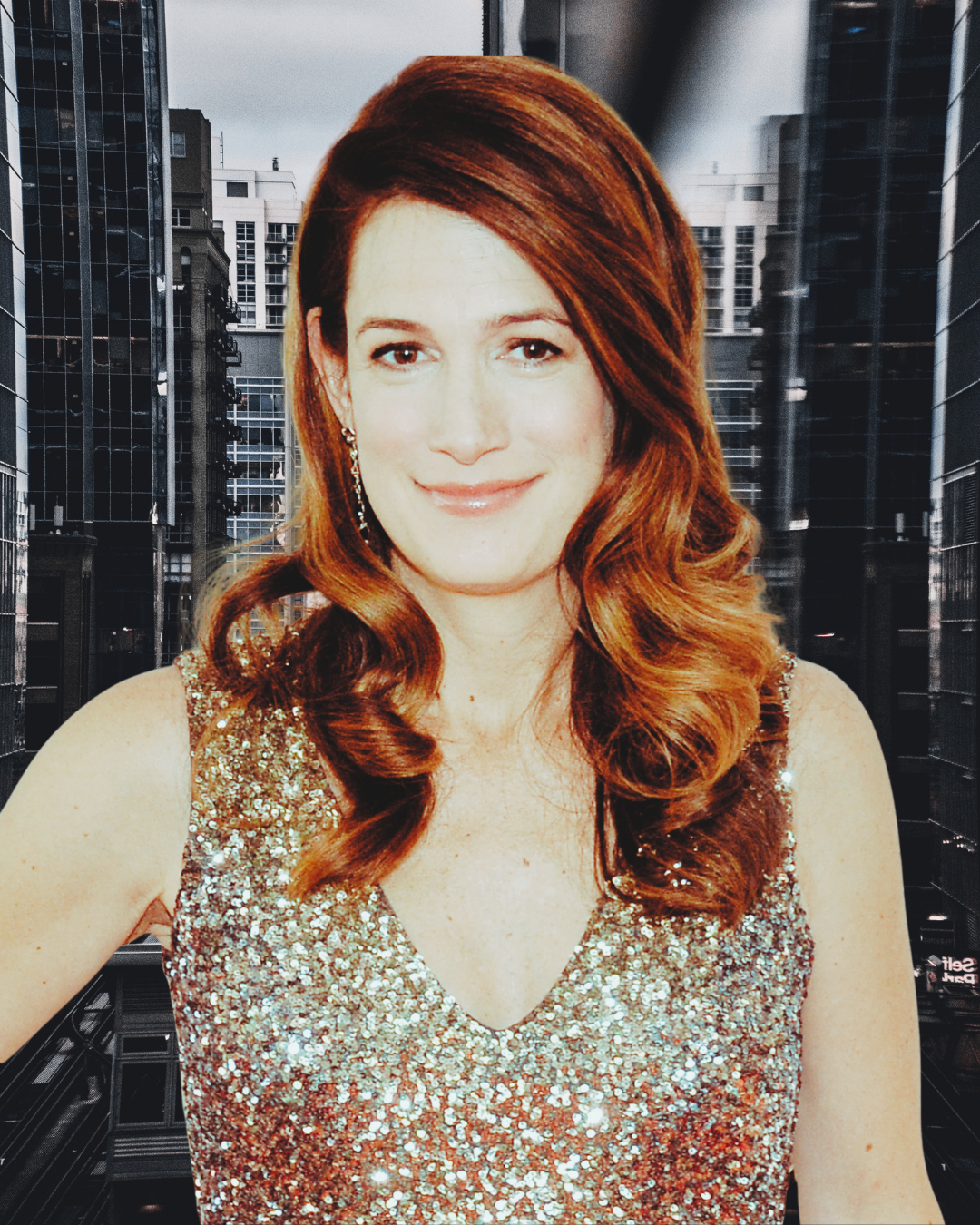
Gillian Flynn hasn't published a novel in thirteen years. Her Twitter bio reads: "yes, yes, yes, I'm writing the next book...I swear."
Everyone keeps asking where she went, sometimes having the audacity to compare her to George RR Martin, Great Unfinisher of Stories, First of His Name. But it’s a strange question, because she didn’t disappear. She didn’t even leave her readers hanging. She's been busy doing something else, and for some reason, we're not quite sure how to feel about that.
The Weight of Lightning
In a May 2025 interview with PEOPLE, Flynn addressed the elephant in the room with characteristic bluntness.
"Oh, my goodness, it's going! It's hard to write after Gone Girl," she said of her fourth novel. "Gone Girl is just lightning in a bottle, never gonna be replicated. So I have to kind of accept that and finish writing the dang book."
She also admitted she has to "stop getting in my head," calling it "not a helpful place to be when you're writing a book."
Twenty million copies. A David Fincher film. A phrase that became a verb ("to Gone Girl someone"). The book succeeded beyond her wildest dreams. Every domestic thriller published in the last decade exists in its shadow, with "the next Gone Girl" becoming a marketing category unto itself.

The funny thing is that Flynn admits she doesn't know if Gone Girl would even get published today.
"It's a weird book, when you think about it," she told PEOPLE. "It's a whodunit, and you find out who done it in the middle, [with] two main characters who aren't very likable."
She's right. It is weird. The structure defies convention. Amy Dunne is a monster—magnetic, terrifying, utterly uninterested in your sympathy. Many readers liked her until the twist. “Diary Amy” was the girl we were supposed to see ourselves in. Let it be known, dear reader, I sure as hell didn’t like her. Finding out “Diary Amy” was a psychopath’s impression of a nice girl was almost a relief. Nick was no prize either– a cheating, passive, self-pitying liar. There's no one to root for.
And Flynn suspects the current publishing landscape wouldn't touch it.
The industry has shifted since 2012. Likability is currency now. BookTok wants relatable heroines and their “golden retriever” book boyfriends. Sensitivity readers scrub the edges off anything that might make someone uncomfortable. Amy Dunne—who frames her husband for murder, fakes a pregnancy, and manipulates everyone around her with surgical precision—would get flagged in the first round of editorial notes. These characters aren't sympathetic. Women readers won't connect with Amy. Can we soften her?
Flynn already heard this once. When she submitted Sharp Objects in the mid-2000s, publishers rejected it because "the characters weren't likable" and "women wouldn't want to read about women doing bad things."
She proved them wrong. Sort of. In my sample size of one, I can report that Sharp Objects absolutely was a tough read for me. But that didn’t make it any easier to put the book down until it was done. She created something dirty but riveting, and we, the readers, wanted more. But somehow, proving the gatekeepers wrong didn’t teach them anything. If the industry that made you doesn't want what you do anymore, what's the incentive to keep feeding it?
The Swerve
Here's what Gillian Flynn actually did with her thirteen years of "silence":
She wrote the screenplay for the Gone Girl film adaptation, earning a Golden Globe nomination. She created and wrote the HBO limited series adaptation of Sharp Objects, starring Amy Adams. She co-wrote Widows with director Steve McQueen. She created Utopia for Amazon. She's currently developing an HBO limited series based on Dark Places, where she serves as co-showrunner, co-creator, and writer (and I am SO EXCITED). She's collaborating with Tim Burton on a remake of Attack of the 50 Foot Woman. She's adapting her Edgar Award-winning short story The Grownup for film. She's written essays for Elle, The New Yorker, Time, and The New York Times.
Hardly a disappearance, right?
While Bookstagram is flooding her comments with “Where’s the next book??” Gillian is running shows, greenlighting projects, shaping what gets made. The CrimeReads critic Lisa Levy put it bluntly: "This is unheard of for a female writer, as women are not generally rewarded in Hollywood without a long track record."
Flynn's track record was three books. That was enough. She took her shot and landed in the executive suite.

She also launched her own imprint under the independent publisher Zando. The mission statement could have come straight from Black Market Fiction's playbook: she wanted to "champion books that don't necessarily fit into one specific shape."
The imprint has published Scorched Grace by Margot Douaihy (a punk, tattooed nun solving crimes in New Orleans), Glass Girls by Danie Shokoohi (a former child medium confronting her past), The Centre by Ayşegül Savaş (a translator drawn into a sinister language school), and One of the Good Guys by Araminta Hall (a psychological thriller that pulls a Gone Girl-style perspective shift midway through).
Notice a pattern? These are exactly the kind of books mainstream publishing calls "too dark," "too weird," "too hard to market." Flynn is using her platform to publish the writers who would have been rejected the way she was—before Gone Girl made her impossible to ignore.
Retiring with the Belt
A fighter who wins the championship has two options: defend the title until someone takes it, or walk away undefeated.
Flynn won. Gone Girl was the belt. Even if you’ve never read the book or seen the movie, you’ve seen the “cool girl” monologue with an aesthetic background on Instagram or TikTok. You’ve watched the YouTube video essays about how Amy is the prefect embodiment of the female psychopath.
Gilly did what every novelist wants to do: defined the genre. And instead of climbing back into the ring to defend it against every "Is it as good as Gone Girl?" review, she moved to a different arena entirely.
Everyone who keeps asking, "When's the next book?" assumes that novelists owe us perpetual output. That the only acceptable career trajectory is more of the same, forever. Write a hit, then write another hit, then another, until you die or flame out or publish something disappointing enough that we can finally stop paying attention.
But why?
We don't demand that musicians keep releasing albums forever. We accept that some artists have a finite number of masterpieces in them. We let athletes retire at their peak instead of grinding themselves down to mediocrity. But writers? Writers are supposed to keep producing until the tank is empty and everyone can see it.
Flynn looked at that expectation and decided it didn't apply to her.
From everything she’s said, there is indeed a fourth novel in the works, one that focuses on parenthood, a new stage of life to write about.
But the timeline is hers. Not ours.
Our Desire is Not Her Priority
We keep framing Flynn's silence as a problem. Thirteen years without a novel must mean something went wrong. Writer's block. Fear of failure. The curse of success.
But maybe the silence is the story.
Flynn wrote the "perfect" novel, and she channeled that success into being a showrunner and publishing other writers who don't fit the mold. Anyone seriously gonna say that qualifies as failure?
William Forrester (fictional though he may be) disappeared into a Bronx apartment and became a romanticised hero. JD Salinger vanished into the New Hampshire woods and we canonized him. But Gillian Flynn "disappeared" into HBO development deals and essay commissions and a publishing imprint… and we treat her like she owes us an explanation.
The difference is optics. We romanticize the hermit who rejects the world entirely. But the writer who keeps working but refuses to give us the specific thing we want looks too much like a choice. A choice we’re certain we wouldn’t have made if we were in her place.
And I think that's what bothers us. The author who makes it to the mountain top supposedly owes all of us who didn’t, to give us the fantasy we’ve had play out in our heads.
Except she doesn’t. None of them do.
If she publishes another novel, it'll be because she wanted to—not because we demanded it. And if she doesn't? She’ll always have three novels that changed the genre, and one that secured its place in the zeitgeist.
There are worse ways to be remembered.
