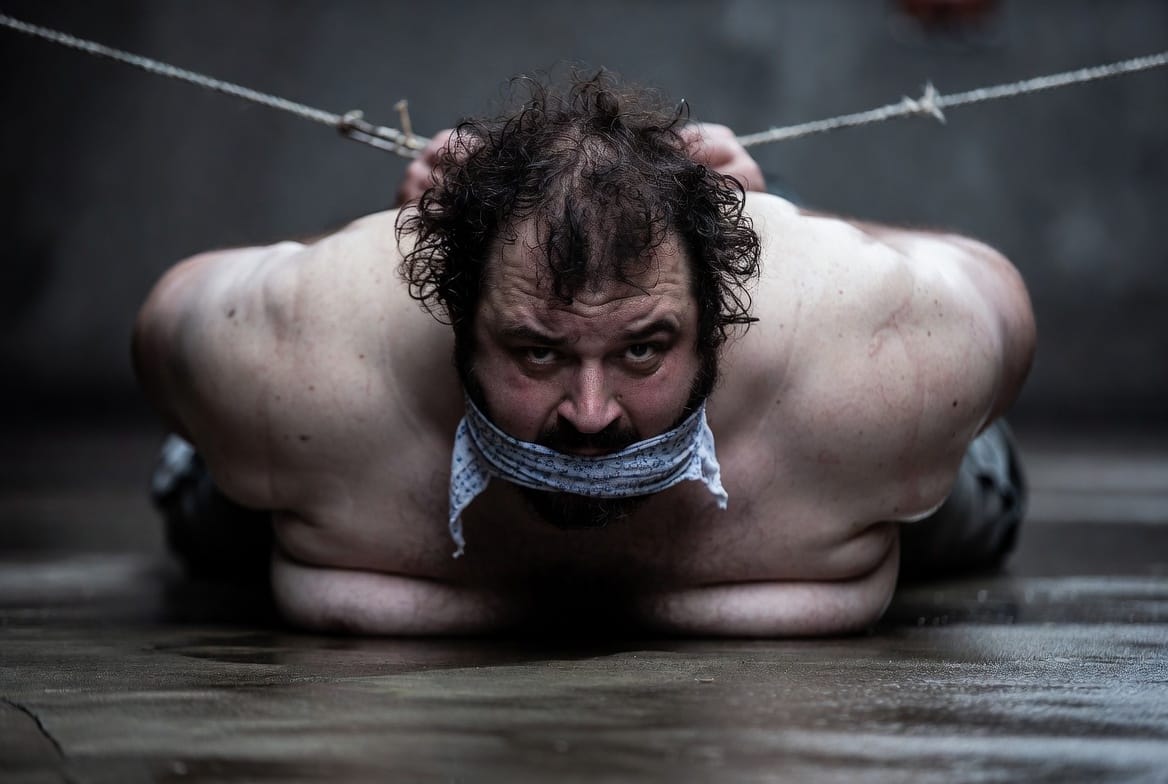


The Enduring Appeal of Characters Who Refuse the System
There's a story—perhaps apocryphal—about a singer summoned to perform for a dictator. When she refused, the tyrant threatened her with torture. Her response has stayed with me for years:
You can make me scream. You cannot make me sing.
That's rebellion distilled to its essence. The dictator could destroy her body, but he could not actually make her do anything. The rapist can rip your clothes off, but he can’t make you undress. The thug can shoot your knees out, but he can’t make you kneel.
When you drill it down to the brass tacks, the only thing anyone can make you do… is die.
That’s a steep price, of course. And not one any of us wants to pay. But the stories that feature characters that are willing to make that sacrifice, if needed, have enduring appeal. We love stories of rebellion, all of us. Somehow, the stories that stay with us, the characters we carry long after we've closed the book, are almost always the ones who looked at the consequence of saying no and replied, “all right, then.”
The Decision Matrix
Rebellion is something of a math problem.
Every act of defiance is a game of "would you rather." Would you rather comply and keep the peace, or refuse and lose your livelihood? Would you rather go along with what's demanded of you, or accept the consequences of going your own way? The rebel is simply someone who runs the numbers and decides the cost of compliance is higher than the cost of resistance.
This calculus plays out in the fiction we love, in the characters who we secretly wish we were.
The Rebels We Love
The Anti-Institutional Hero. Lisbeth Salander (The Girl with the Dragon Tattoo) operates entirely outside the legal and social systems that failed to protect her as a child. She is the type of autistic rebel (and a highly competent one) that has been rising in prominence among the terminally online set. Jack Reacher scratches the same itch, though in a more normie way. The kind of way your Boomer dad approves of. Reacher has no fixed address; he lives an unconventional life. But he still has ties within the system, and he taps into them when he needs to. These characters resonate because they've achieved what many of us secretly crave: complete autonomy from the institutions that constrain and disappoint us. They know what it is to belong, to have that normal picket fence life. And they decided the price—the compromises, the dependencies, the vulnerability to institutional failure—wasn't worth paying.
The Moral Rebel. Atticus Finch defies his entire community for a principle. We won’t talk about the posthumous sequel that reframes Atticus, as that’s a whole other discussion. The moral rebel has been the most popular flavor for the last few decades. It’s more relatable. Or at least in the everyday man or woman’s mind, they think they relate. But in truth, social ostracisation is a primal fear, and most people underestimate how hard it is to endure being shunned. Even after 2020, there are still people who insist they would do the right thing “if something bad happened.” Sure, Jan.
Reading about the moral rebel, even in the more insufferable woke-scold works, is a good reminder that consensus isn't morality, that sometimes the crowd is simply wrong, and that one person can stand against it.
Why the Stories Matter
We root for rebels because we've lost faith in the alternatives. Sure, there are some people who were raised outside “the system.” But they’re vanishingly rare. Most of us were raised within the bounds of society and were “educated” about how that society worked and all the ways it would look after us, if only we did our part.
But then we grew up and saw that was a load of codswallop. Institutions have failed us systematically and repeatedly. And now, thanks to the internet and ubiquitous cell phone cameras, they can’t hide their failures the way they used to.
We see their bullshit in 4k.
The authorities who demanded our trust have squandered it. In this environment, the rebel is the only character who makes sense.
Rebellion narratives offer what institutional life denies us: direct action. The fantasy of cutting through the gatekeepers and solving problems yourself instead of waiting for someone with credentials to get around to it is absolutely tantalizing.
This is why we keep returning to certain characters, why we make memes of them, and even use them as the wallpaper on our cellphones. We identify with them because they are our teachers, not just our ego fantasies.
We all love to growl, “I am the one who knocks!” (Walter White, Breaking Bad) into the mirror when no one is looking. The power fantasy is ubiquitous, and just as much a part of our humanity as love is. But rebellion, by its nature, means you are not in a position of power, a wound to the ego in and of itself.
It takes practice to take that hit to the ego. Practice and preparation, which is what these stories provide us.
Rebelling Early and Often
I learned rebellion young. As a child, I once deliberately injured myself to avoid a chore I'd been unfairly assigned while a favored sibling was spared. The adults bellowed, threatened punishment. They could make me hurt, but they couldn't make me comply. Even then, I understood something fundamental: when I say no, that's just what the fuck I mean–even if that makes my life worse.
As an adult, I’ve willingly taken social ostracization because I refused to give the “right” answer about social or political issues. As a business owner, I've walked away from lucrative relationships with people who wanted to set terms on my healthcare, my private decisions, things they had no claim over. The money would have been nice. My autonomy was worth more.
And once—only once, because I'm honestly too afraid to do it again—I deliberately antagonized someone I knew would physically attack me. I wanted them to know that someone would stand up to them. The concussion taught me that bravery has a price tag, and sometimes the receipt arrives later than you'd like. But that's rebellion. The willingness to pay the cost, even when you don't know exactly what it will be.
The Line Between Defiance and Destruction
Some rebellion is just destruction. Like Alfred once said of the Joker, “Some men just want to watch the world burn.”
Call me an optimist, but I don’t think that’s the kind of rebel most people dream of being. Yes, the Joker is a rebel. So is every petty tyrant who refuses to follow rules because they believe themselves exempt. "Refusing to compromise" can shade into "refusing to coexist," and principled defiance can curdle into destructive nihilism.
The difference isn't always obvious from the outside. What separates the rebel with a cause from the guy whose only reason for being is “fuck you, that’s why?” What distinguishes Tyler Durden's legitimate critique of consumer capitalism from his slide into fascist violence?
The answer, I think, is purpose. The rebel worth rooting for fights for something—a principle, a person, a vision of how things should be. Their defiance is constructive even when it's destructive. They break rules to build something better, to protect something worth protecting.
This is why the best rebellion narratives don't just ask "should they rebel?" They ask "what happens when they do?" They follow the consequences, show us what's built and what's broken. They treat rebellion as serious, because it is.
The Rebel Playbook
I've made my peace with many systems. Age does that to you, if you're paying attention.
I appreciate social cohesion. I value cooperation. I understand that most of the time, going along is simple pragmatism—the recognition that some rules exist for good reasons, that functioning society requires a baseline of mutual accommodation.
But those things only work when everyone knows their lane and stays in it. When institutions fulfill their promises. When authorities enforce the rules equally and protect society as a whole, rather than their own interests.
That's a tall order. And until it's filled—until the world gives me reasons to put down my ass-beating stick—I’ll keep my rebel playbook handy.
I suspect you will too. That's why you're reading this.
Rebellion narratives endure because they let us practice, giving us the opportunity to (safely) watch what happens when people draw their line in the sand. They let us feel the weight of that decision before it's demanded of us.
Somewhere, right now, someone is being told to comply. To write an essay affirming a worldview they find abhorrent. To stay silent about something they saw. To take money and influence if only they stand aside and let wicked acts go on unimpeded. Most of the time, they will. The cost of refusal is real, and most of us aren't willing to pay it.
But sometimes—in the moments that matter—someone will remember a story they read. A character who looked at the price and paid it anyway. A singer who told a dictator that he could make her scream but not sing.
And they'll find, when they need it most, that they've been rehearsing all along.